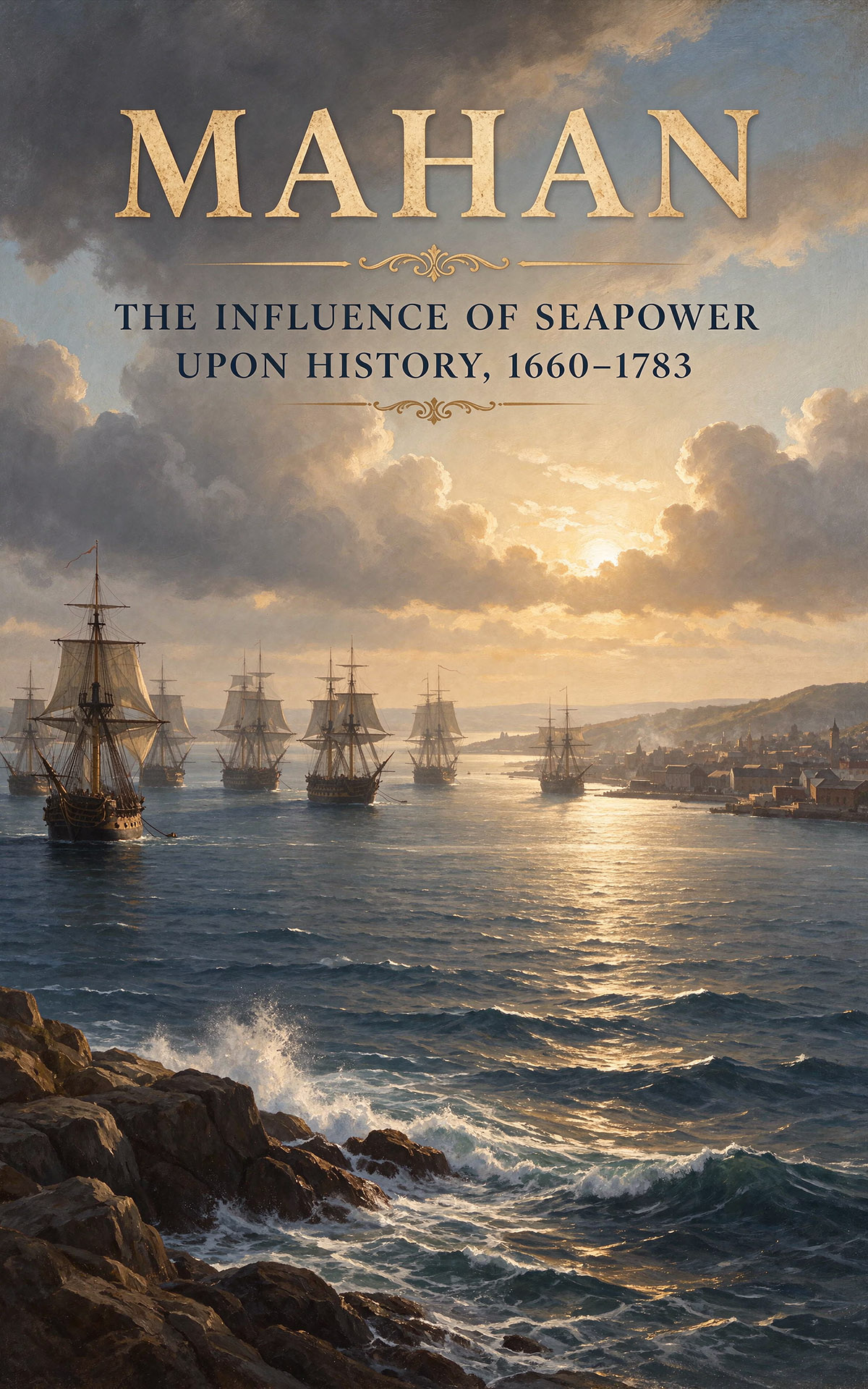
The Influence of Sea Power upon History, 1660–1783
From $9.99/month — 3 ebooks per month
About this book
Published in 1890, The Influence of Sea Power upon History is the book that made Alfred Thayer Mahan the most consequential naval theorist of the modern era. Its argument is sweeping: from the Anglo-Dutch wars of the 1660s through the American Revolution, the nations that built and sustained powerful navies — protecting their commerce, securing overseas colonies, and commanding the sea lanes — rose to greatness, while those that neglected their fleets or squandered them on defensive strategies and commerce-raiding declined, no matter how strong they were on land. Mahan traces this thesis through a century and a quarter of European warfare, demonstrating that sea power is not merely a military instrument but the foundation of national wealth, political influence, and imperial reach.
The book opens with a theoretical framework that identifies six elements determining a nation’s fitness for sea power: geographical position, physical conformation of coastline, extent of territory, population, national character, and the character of government. Mahan then applies these principles to the great naval conflicts of the age of sail — the Dutch wars, Louis XIV’s overextension of France, the rise of British supremacy through the wars of the Spanish Succession and the Seven Years’ War, and the decisive role of French naval intervention in the American Revolution. Each chapter centers on specific fleet actions — Solebay, Beachy Head, La Hougue, Malaga, the battles off Ushant, Grenada, the Chesapeake, and the Saints — using them to illustrate broader strategic lessons about concentration of force, the superiority of offensive operations, and the fatal consequences of dividing a fleet or adopting a purely defensive posture.
What gave the book its extraordinary influence was its timing and its implications. Written just as the great powers were entering an era of imperial competition, steel navies, and global commerce, Mahan’s historical argument read as a blueprint for the present. Kaiser Wilhelm II ordered copies placed on every ship in the German navy; Japan’s naval leadership studied it as they built the fleet that would destroy the Russian squadron at Tsushima; and in the United States it provided the intellectual foundation for the expansionist naval policies of Theodore Roosevelt’s era. More than a work of military history, it is an argument that the sea is the great common of civilization, and that the nation which controls it controls the terms on which all others prosper or fail.
- Published
- December 1, 1890