On Naval Warfare
From $9.99/month — 3 ebooks per month
About this book
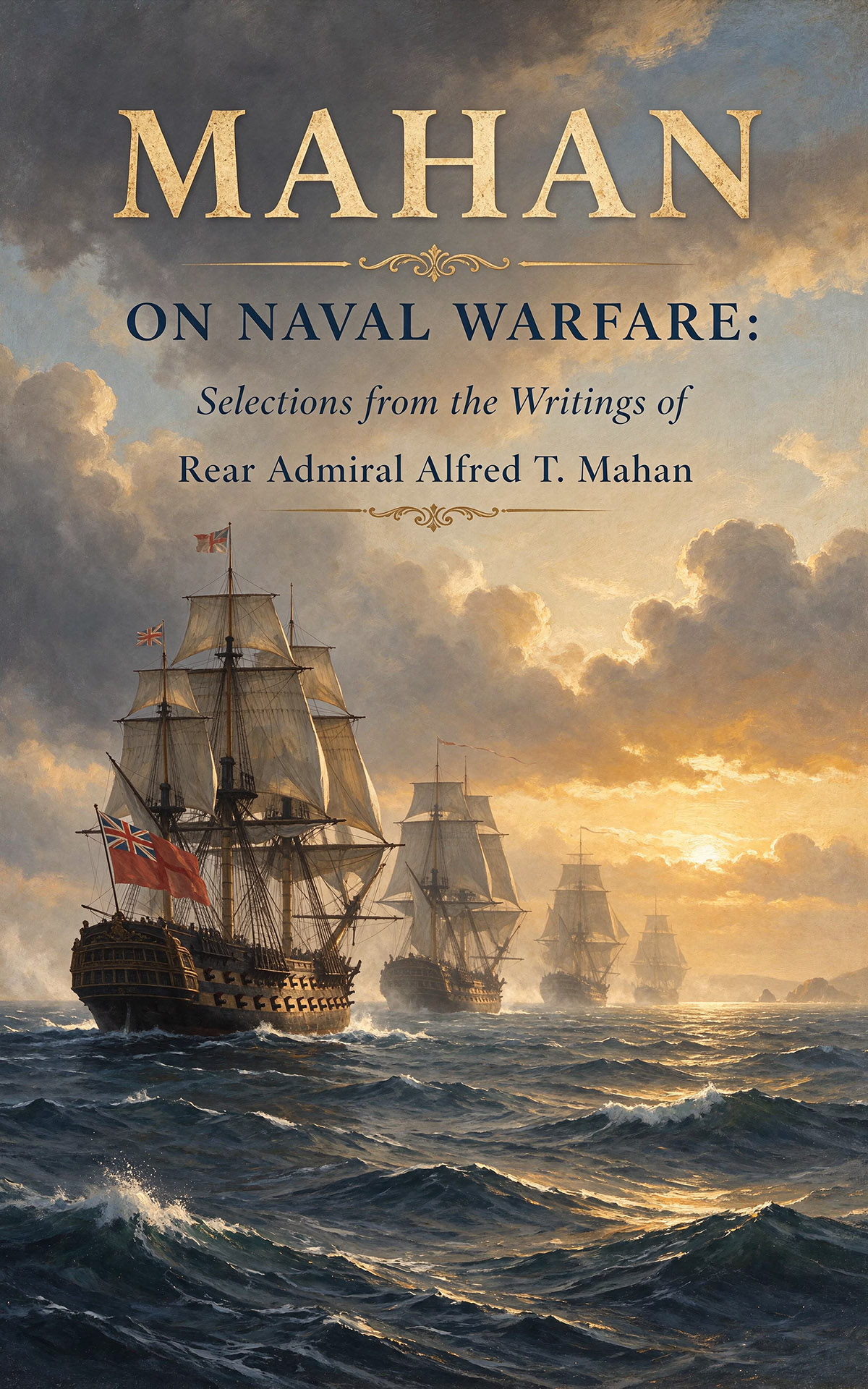
Rear Admiral Alfred Thayer Mahan was the most influential naval theorist in modern history, and this 1918 anthology, edited by Allan Westcott of the U.S. Naval Academy, gathers the essential passages from across his lifetime of writing. Mahan’s central thesis, first articulated in The Influence of Sea Power upon History (1890), is that command of the sea — through strong navies, merchant fleets, and overseas bases — has been the decisive factor in the rise and fall of great powers since the seventeenth century. That book was read and annotated by Kaiser Wilhelm II, translated into Japanese, Russian, and half a dozen other languages, and shaped naval policy from London to Tokyo in the decades before the First World War.
The selections are organized into three parts. The first lays out Mahan’s theoretical framework: the elements that make a nation a sea power, the distinction between strategy and tactics, the principles of concentration and interior lines, the superiority of offensive operations, and the question of commerce-raiding versus fleet action. The second part applies these principles to history, tracing the growth of British naval supremacy from Louis XIV through Trafalgar, the role of French sea power in the American Revolution, and the lessons of the Spanish-American and Russo-Japanese wars. The third turns to policy, arguing for American expansion into the Caribbean and Pacific, the strategic importance of Hawaii and Panama, the rising German naval threat, and the enduring necessity of military force in international affairs.
What distinguishes Mahan from mere military historians is his insistence that naval power is inseparable from national prosperity and political destiny. He demonstrates again and again that nations cut off from the sea — whether by enemy fleets, bad policy, or geographic disadvantage — wither economically and lose their standing among nations, while those that maintain strong navies and open trade routes flourish even when outmatched on land. Written on the eve of America’s emergence as a global power, these selections remain a foundational text in strategic thought, as relevant to any student of geopolitics today as they were to the admirals and statesmen of Mahan’s own era.
- Published
- October 1, 1918