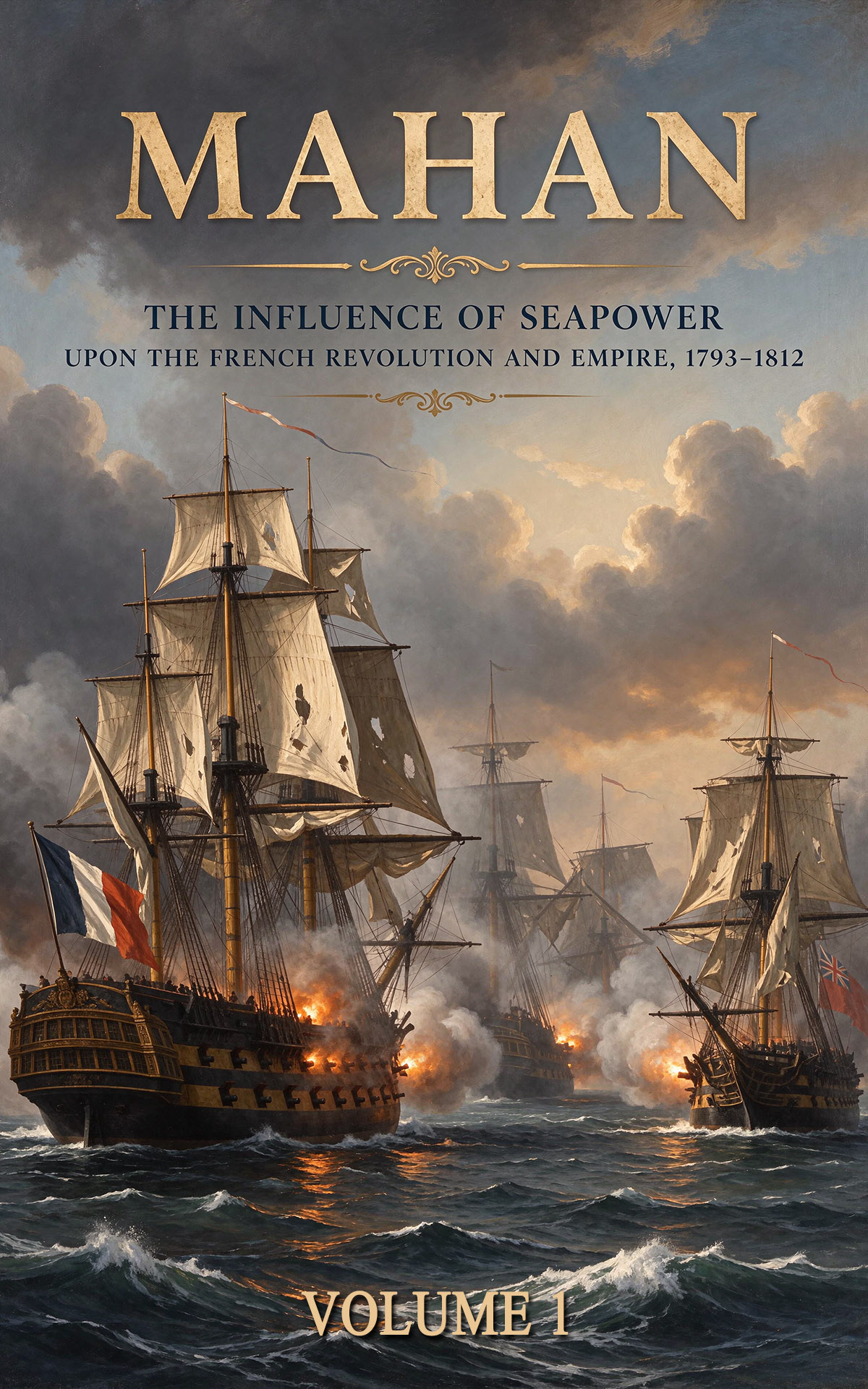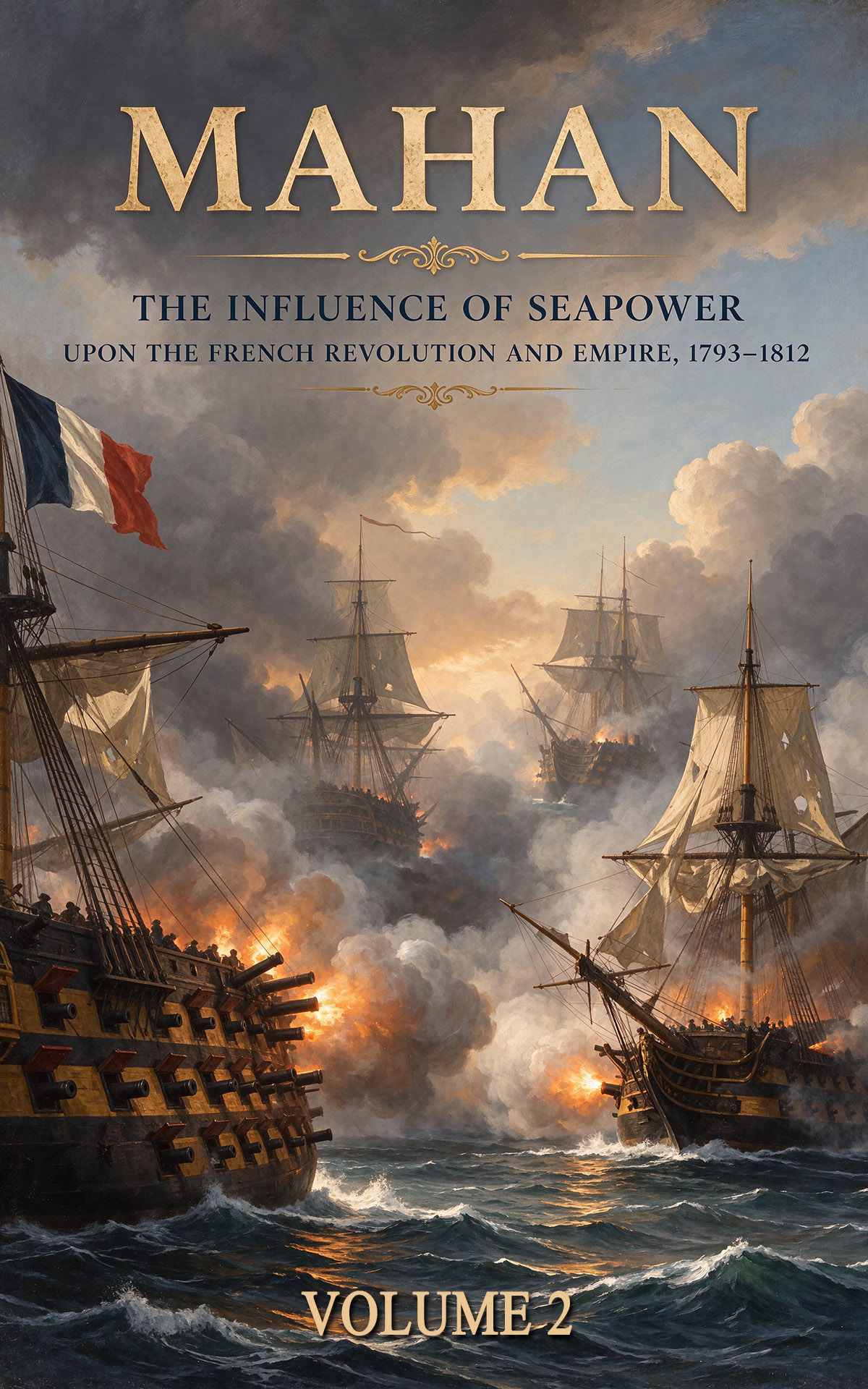
The Influence of Sea Power upon the French Revolution and Empire, 1793–1812, Volume 2
From $9.99/month — 3 ebooks per month
About this book
VOLUME 2
The Influence of Sea Power upon the French Revolution and Empire, 1793–1812 is the sequel to Mahan’s foundational work, extending his analysis from the outbreak of the French Revolutionary Wars through Napoleon’s disastrous invasion of Russia. Published in 1892 as two volumes, it applies the strategic principles established in the first book to the most dramatic naval epoch in history — the era of Nelson, Trafalgar, and the Continental System. Where the first volume built the theoretical case for sea power through a broad survey of a century of conflict, this one is a sustained narrative argument that British command of the sea was the single decisive factor in the defeat of Revolutionary and Napoleonic France, the most powerful land empire Europe had seen since Rome.
Mahan traces how the French Revolution destroyed the ancien régime’s navy from within — the purge of aristocratic officers gutted the fleet’s professional competence, and the resulting defeats at the Nile and Trafalgar eliminated France as a naval power. Napoleon, unable to cross the English Channel or protect French commerce and colonies, was forced into the Continental System, an attempt to strangle British trade by closing every European port. Mahan shows how this strategy, born of naval impotence, drove Napoleon into the ruinous campaigns that destroyed him: the invasion of Spain to enforce the blockade, the break with Russia when Tsar Alexander reopened his ports to British goods, and the long economic war of attrition that Britain, sustained by her merchant fleet and overseas empire, could endure and France could not.
The book is both military history and strategic philosophy. Mahan uses the great fleet actions — the Glorious First of June, the Nile, Copenhagen, Trafalgar — not as set pieces but as illustrations of the broader thesis that a nation which commands the sea controls the economic arteries of its enemies. Nelson’s destruction of the French fleet at the Nile stranded an entire French army in Egypt; his victory at Trafalgar ended forever the threat of invasion and freed Britain to project power anywhere on the globe. But Mahan is equally interested in the long, unglamorous work of blockade, convoy escort, and commerce protection that slowly strangled the French economy while British trade flourished. The two volumes together form the fullest demonstration of Mahan’s central argument: that sea power, exercised with patience and persistence, is the ultimate arbiter among nations.
- Published
- December 1, 1892