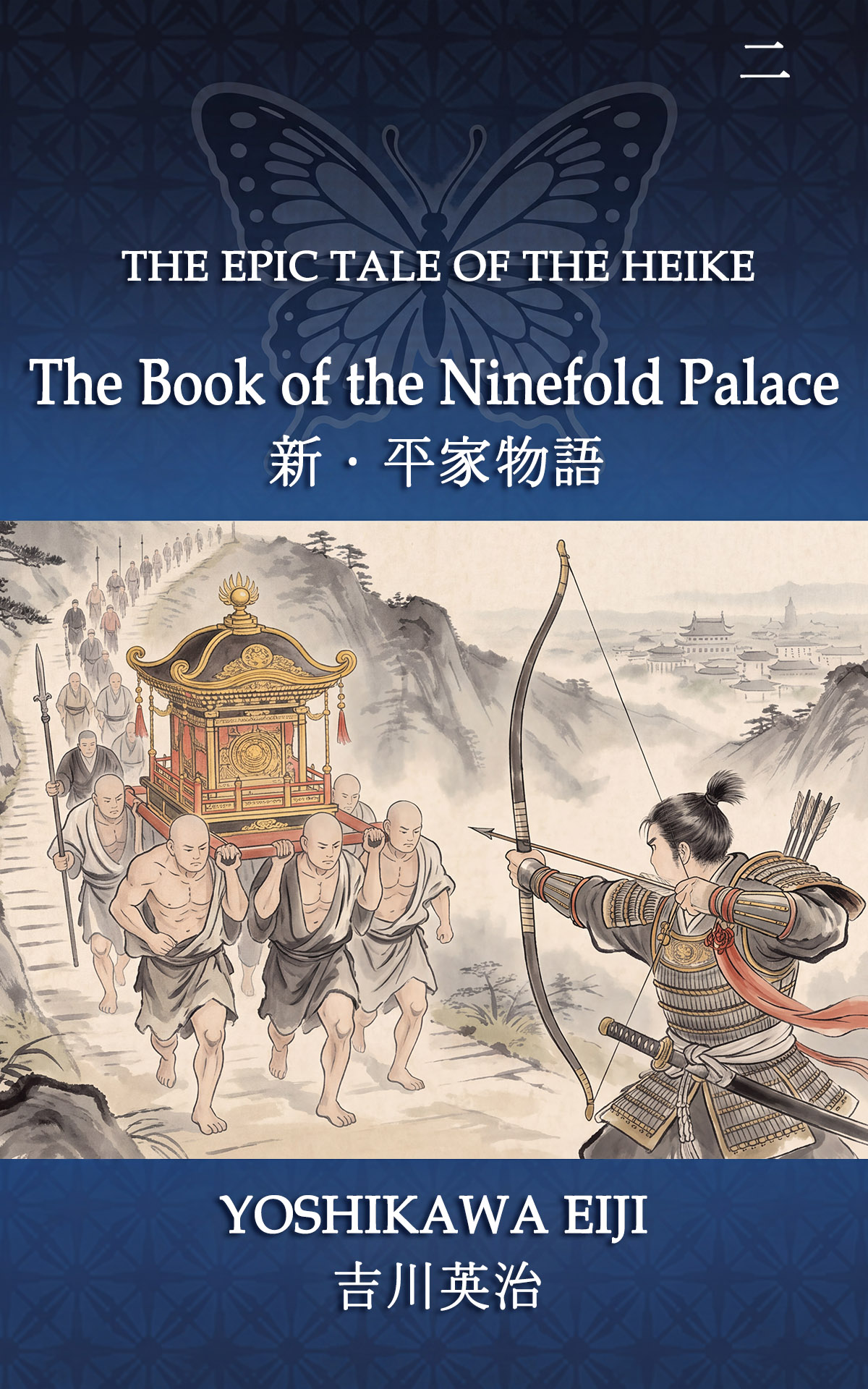
The Book of the Ninefold Palace
Book 2 of The Epic Tale of the Heike
From $9.99/month — 3 ebooks per month
About this book
Book Two: of Shin Heike Monogatari
Book Two shifts from the intimate world of Kiyomori’s youth to the volatile politics of a crumbling imperial order. It opens on Mount Hiei, seat of the great monastic establishment whose warrior-monks are a law unto themselves, and whose armed descent on the capital with their sacred palanquin forces the first real test of Kiyomori’s nerve. His brazen refusal to cower before the monks makes his name — and earns him a year of house arrest at Rokuhara, where Yoshikawa pauses to show us a domestic scene of startling tenderness: the young father watching his ten-year-old son Shigemori practice archery in the garden. Meanwhile, the novel’s focus widens to encompass the Fujiwara regency, where the patriarch Tadazane’s favoritism toward his brilliant, ruthless younger son Yorinaga over the capable elder Tadamichi plants the seed of a fraternal rivalry that will tear the court apart.
The book’s second half traces, with gathering momentum, the cascade of succession crises that ignites the Hōgen Rebellion of 1156 — the first open civil war to engulf the capital in three centuries. Emperor Sutoku is forced to abdicate; the child emperor Konoe sickens and dies; the Cloistered Emperor Toba dies in turn; and the unexpected accession of Go-Shirakawa enrages Sutoku and his ally Yorinaga past the point of restraint. Warriors occupy the Sanjō Palace, monks take sides, and the capital splits into armed camps. Yoshikawa closes the book not on the battlefield but in the women’s quarters of the Kujō-in, where the young attendant Tokiwa — already mother of two sons by Minamoto no Yoshitomo — carries a third child in her womb. That unborn boy is Yoshitsune, the military genius whose campaigns will one day decide the war. The future of Japan is already conceived, even as the world that conceived it begins to burn.
- Published
- June 1, 1950
More to explore