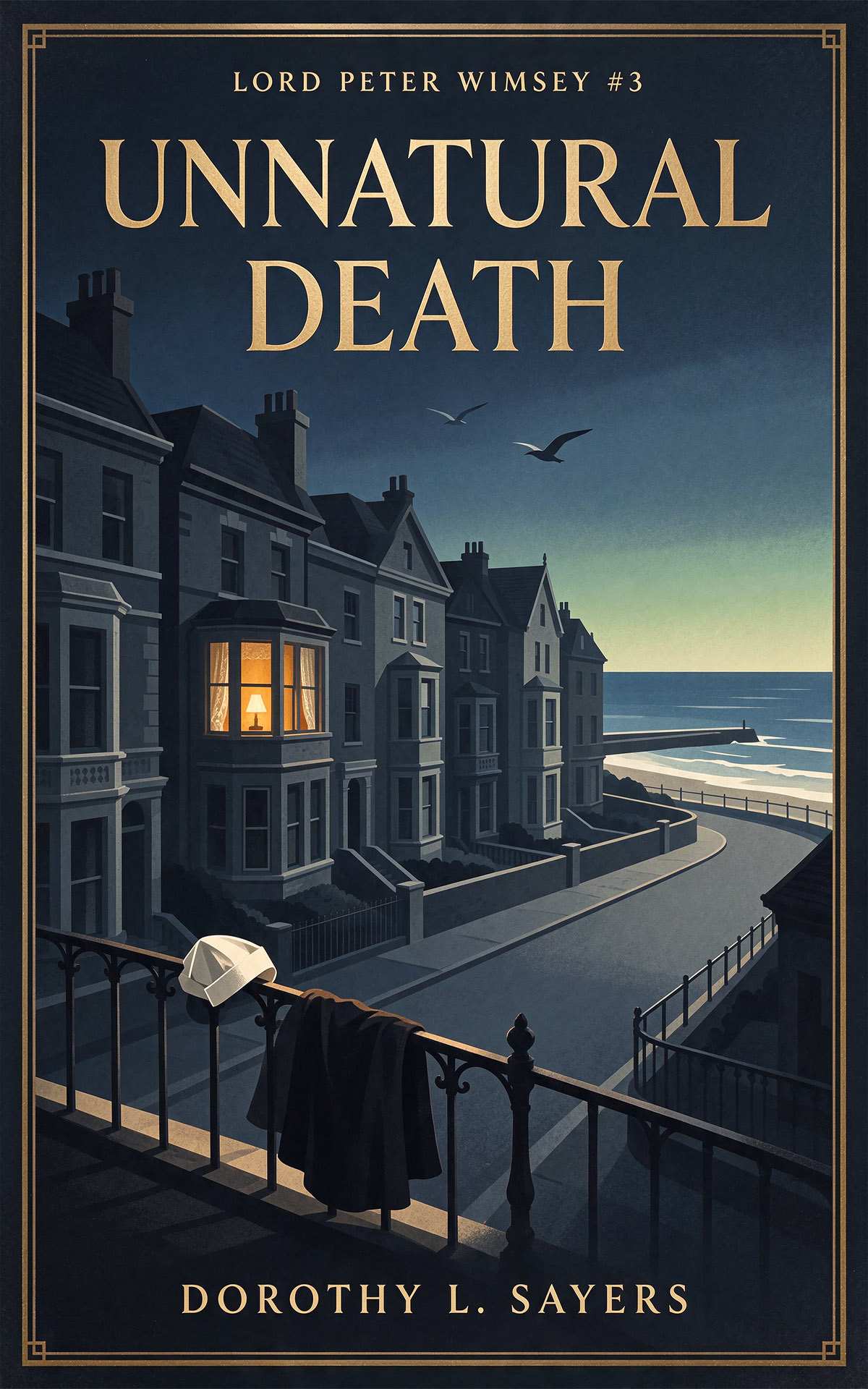
Unnatural Death
Book 3 of Lord Peter Wimsey
From $9.99/month — 3 ebooks per month
About this book
An elderly cancer patient named Agatha Dawson dies in her bed at Leahampton, attended by a nurse and watched over by her great-niece Mary Whittaker. There is no evidence of foul play — no poison, no violence, no marks on the body — and the death might have passed unremarked except that the attending physician, a young Dr. Carr, mentions the case over dinner to Lord Peter Wimsey. What troubles him is not anything he can prove, but a feeling: the niece had been too prepared, the nurse too conveniently substituted, and the old lady’s sudden death too neatly timed to forestall a change in the inheritance law that would have given her property to the Crown. Wimsey, intrigued by the possibility of a murder that left no medical trace whatsoever, begins to investigate — and sets in motion a chain of further deaths.
The novel is structured in three parts around three overlapping problems. The medical problem is how anyone could have killed a bedridden old woman without leaving a trace that any post-mortem could detect. The legal problem is the will: under the existing law, Mary Whittaker inherits everything automatically as next of kin, but a new Act of Parliament is about to change the rules of intestate succession, which gives her the one motive that matters — she had to kill her aunt before the law changed, or lose the fortune. The medico-legal problem is proving any of it. Wimsey enlists the magnificent Miss Climpson — a garrulous, devout, sharply intelligent spinster whom he has set up as the head of a one-woman detective bureau staffed by “superfluous women” — to infiltrate Leahampton society and extract the gossip the police cannot reach. As Miss Climpson burrows into the life of the village, the bodies begin to accumulate: a maid who knew too much, a chance witness lured into a trap, and finally a young woman whose only crime was being Mary Whittaker’s devoted friend.
- Published
- January 1, 1929