About this book
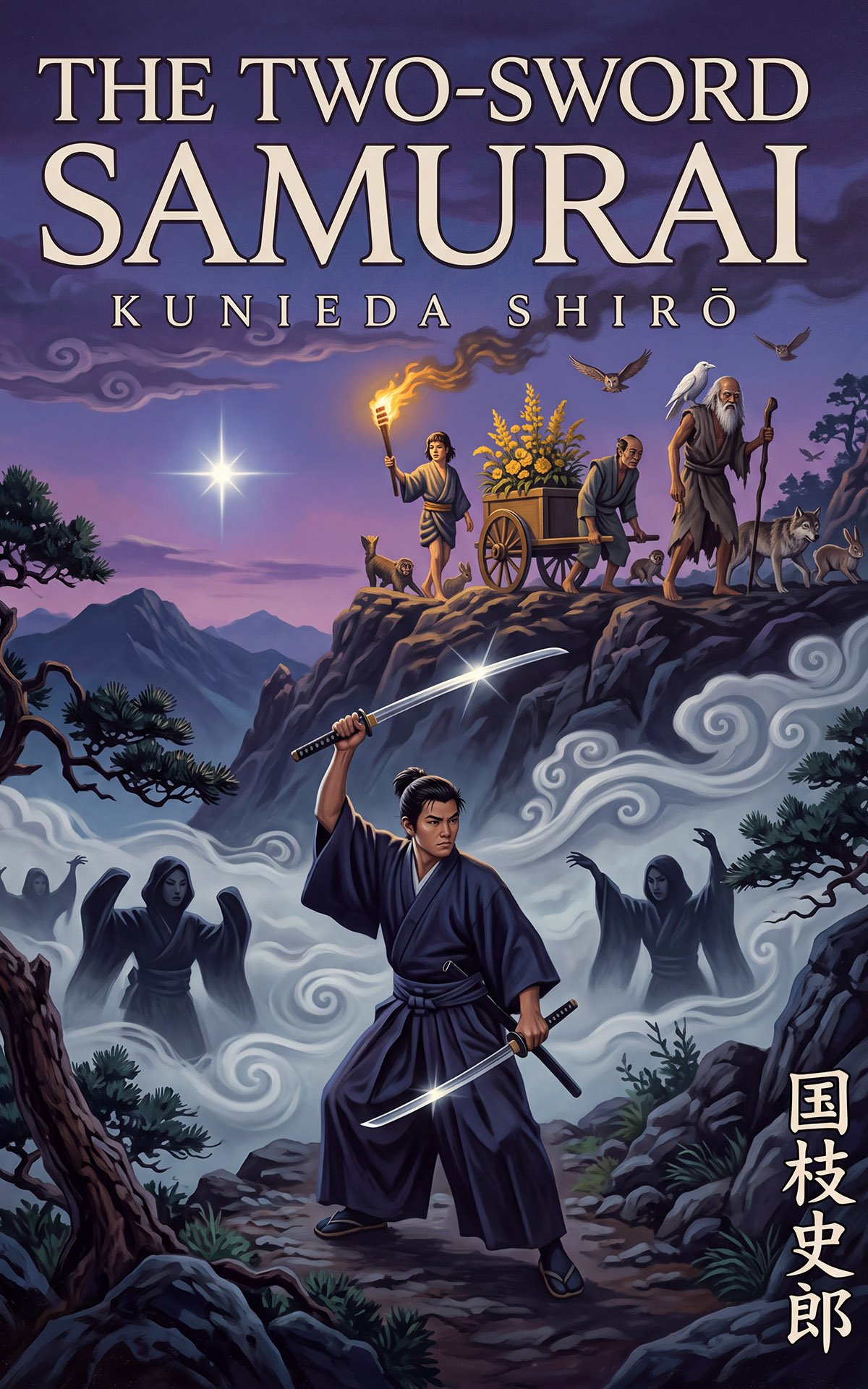
In the reign of the shōgun Yoshimune, the shōgun lies gravely ill, and the great lords quarrel over a legend. The House of Mito insists that the greatest physician of all the ages, Tokuhon of Kai, still lives hidden in the mountains of Kiso, tending ten miraculous herbs, although by any reckoning he would be a hundred and eighty years old. Mito sends the young swordsman Yamakage Sōzaburō, a master of the Enmei school’s two-sword style, to find him and bring him to Edo. The Shimazu of Satsuma, at the center of a conspiracy among the outside lords to bring down the shogunate, send the cold-blooded Ijūin Gorō to find the old man first and kill him. And on the Kōshū road behind them both walks Braid Osen, the snake-charmer of Ryōgoku, who loves Sōzaburō and has taken Satsuma gold to follow him.
High on Mount Ontake the searchers find a barefoot old man in rags, with a white crow on his shoulder, wolves and monkeys trailing behind him, and an herb cart crowned with golden flowers. He calls himself the Herb Sage, dispenses ointment and mockery in equal measure, and preaches that the whole secret of governing is to feed the people and stop scolding them. Around him gathers a crowd of rivals and schemers: Hamaji, the headman’s daughter, who loves Sōzaburō as fiercely as Osen does; the Sanka, wild mountain folk; the Crow band of Satsuma and the Heron band of Mito, two companies of women spies; a seductive actress of the women’s kabuki; and Owari Muneharu, the pleasure-loving lord of Nagoya. From mountain lakes to the streets of Nagoya and the secret passages beneath its castle, the struggle for the Sage becomes a struggle for the realm.
First serialized in the Nagoya Shimbun in 1926, The Two-Sword Samurai shows Kunieda Shirō at his most exuberant: a sprawling, comic and sometimes eerie adventure of swordplay, spies and rival loves, presided over by one of the most delightful wise fools in Japanese popular fiction.
- Published
- December 1, 1926
More to explore