The Seven-Branched Candelabra
Book 6 of Commissario De Vicenzi
From $9.99/month — 3 ebooks per month
About this book
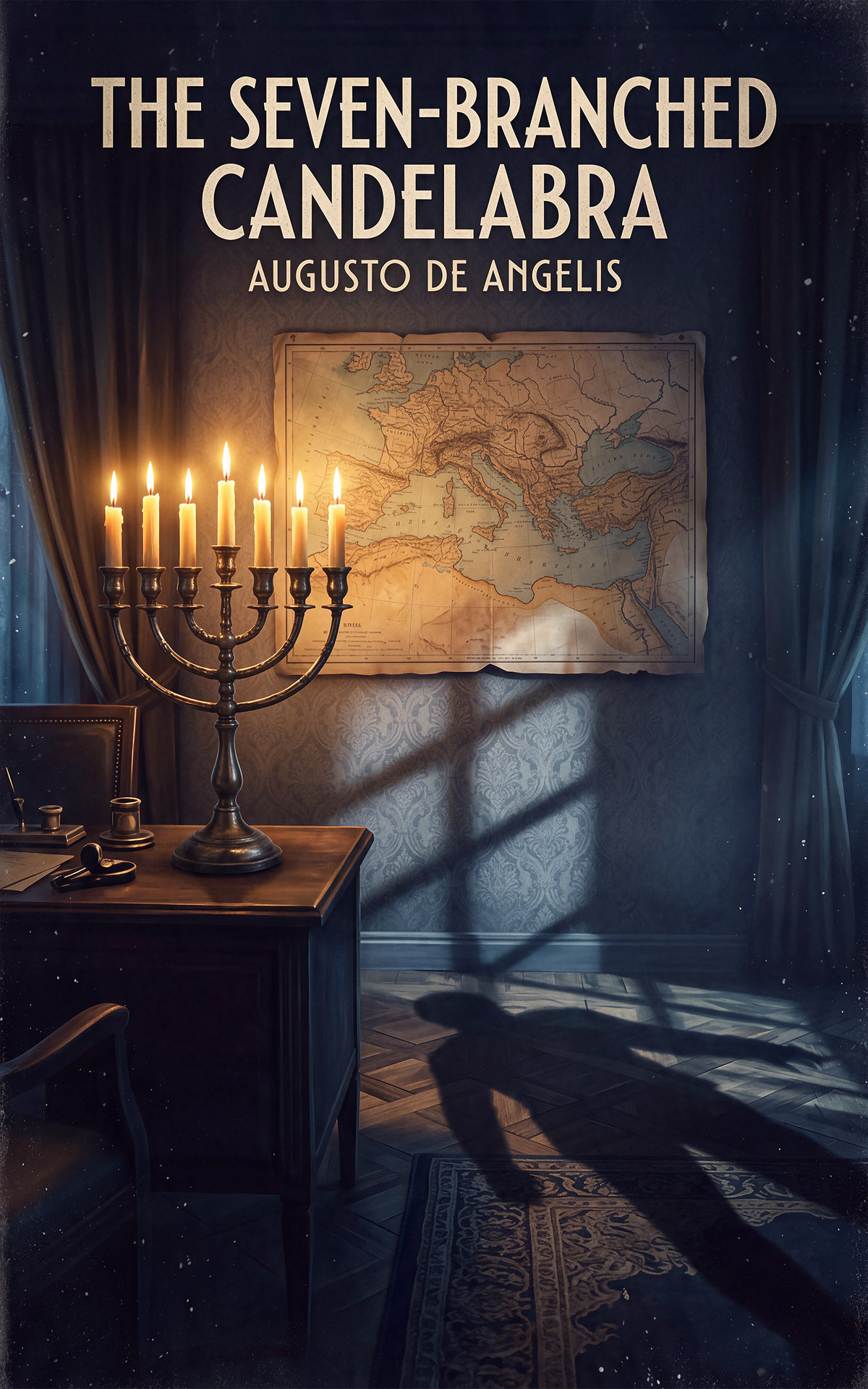
Published in 1936, The Seven-Branched Candelabra opens with a newspaper clipping about a mummified corpse discovered in a London cellar — a man who went out in a walking suit and was found a year later dressed in beggar’s rags. This macabre dispatch sets the tone for a mystery that soon erupts much closer to home: in a squalid Milanese flophouse called the Specchio d’Oro, a man named Melkon Gehenlyan is found in his pajamas with his belly slashed open from side to side. His pockets have been emptied, every tailor’s label cut from his clothes, and every means of identification methodically destroyed. Yet his suitcase is fitted with silver toiletries. He is clearly no ordinary guest of that lowest-order hotel.
Commissario De Vincenzi’s investigation draws him into a web of international intrigue centered on a seven-branched candelabra of extraordinary value. A mysterious blonde woman calling herself Virginia Olcombi escapes from custody at the Questura; a sinister figure known as the “human spider” lurks at the edges of the case; and a man named John Vehrehan moves through the affair with the calm deliberation of someone accustomed to operating across borders. The trail leads De Vincenzi from Milan to Venice by night express, and from Venice aboard a steamer bound for the eastern Mediterranean, where among the empty first-class cabins and the motionless sea he keeps watch through the small hours, waiting for the violence he knows is coming.
The novel is De Angelis at his most cosmopolitan: the story spans Milan, Venice, Brindisi, and the open sea, and its cast includes Armenians, Greeks, and Englishwomen alongside the usual Milanese demimonde. Through it all, De Vincenzi pursues the case with his characteristic blend of cerebral tenacity and melancholy, aware that the candelabra leaves ruin in its wake.
- Published
- December 15, 1936
More to explore