The Royal Weddings
Book 30 of Episodios Nacionales
From $9.99/month — 3 ebooks per month
About this book
The Royal Weddings
Original title: Bodas reales
Episodios Nacionales · Third Series · Volume X
Madrid, 1846. The Carrasco family from La Mancha — don Bruno, his homesick wife doña Leandra, and their daughters Eufrasia and Lea — struggle with the gap between provincial roots and metropolitan ambition. Doña Leandra haunts the southern inns and carriers' quarters of the Cava Baja, pining for the country life and interrogating every Manchegan muleteer about chickpeas and gossip from home, while her daughters have been rapidly transformed by the capital into polished young women with suitors and social pretensions. Eufrasia, the younger, has developed a fierce appetite for luxury and society; Lea, the elder, keeps her vanity within modest bounds and quietly courts the Irish-descended officer Tomás O'Lean.
The novel traces the tangled diplomatic intrigues surrounding the double royal marriage of Queen Isabel II to her cousin Francisco de Asís, and of her sister the Infanta Luisa Fernanda to the Duke of Montpensier — a French triumph that the charming Count Bresson openly calls "the revenge for Waterloo," leaving England's Bulwer humiliated. Against this backdrop of great-power matchmaking, the domestic plot reaches its own crisis: Eufrasia's disgrace with the man Terry, Lea's hard-won engagement, and the death of poor doña Leandra, the Manchegan matriarch who never stopped longing for the round chickpeas and honest air of Daimiel.
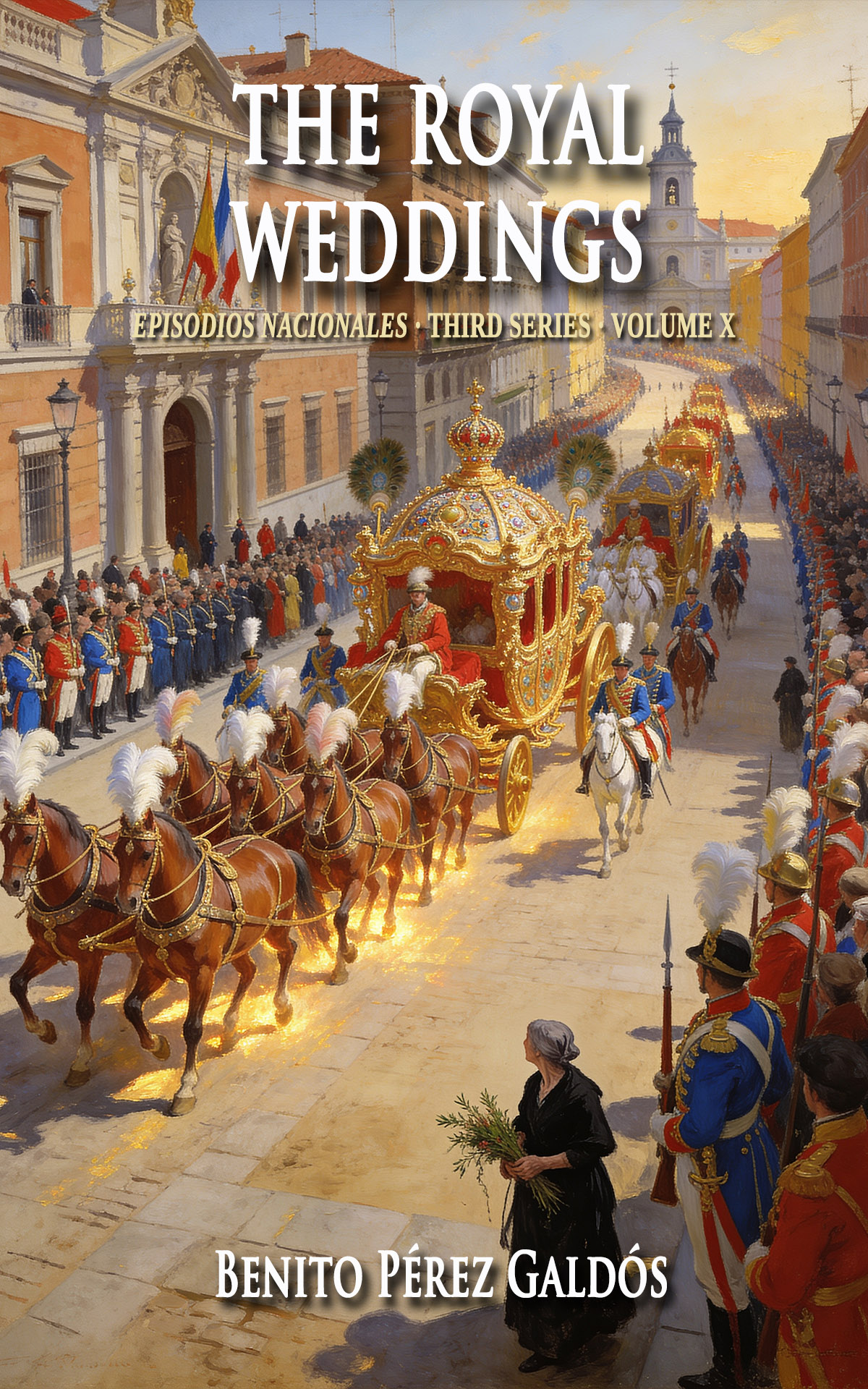
The final chapter sets the funeral against the royal wedding procession itself. The cortège cannot pass through the streets because the troops are drawn up for the great spectacle; the black car is forced northward through outlying quarters, then rushed south at an indecorous gallop as night falls, until the Manchegan woman is put into her niche at a run — the petrifaction of oblivion working itself out while Madrid celebrates the marriage of a Queen whom the people love with a frank, familiar, almost fraternal devotion that Galdós paints as the truest and most dangerous thing in Spanish political life. Don José Milagro and the old lizard Socobio ride home from the burial talking politics, and the Carrasco boys, locked indoors in rigorous mourning, go out the next day to find nothing left of the festivities but dismantled poles, torn canvas, and the ugly oil stains on the walls of public buildings — stains, Galdós writes, that looked like they would never come off.
- Published
- June 30, 1900
More to explore