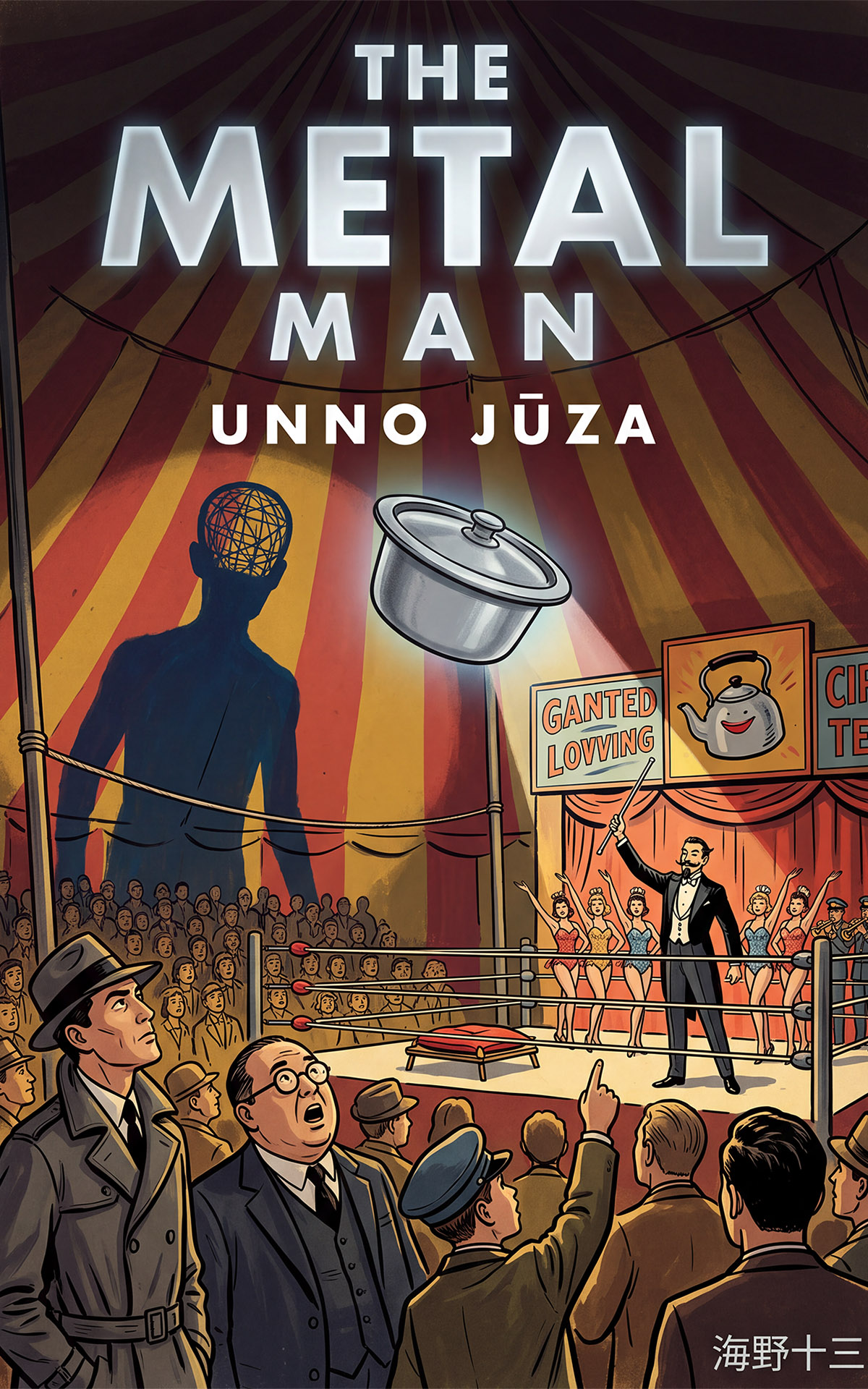
The Metal Man
by Unno Jūza
From $9.99/month — 3 ebooks per month
About this book
THE METAL MAN (金属人間, Kinzoku Ningen) is a science fiction mystery novel by Unno Jūza, set in prewar Tokyo. It opens with the discovery of a journal entry by the reclusive scientist Dr. Harime Samata, who claims to have created something called “Metal Q” — and then a series of impossible crimes begins at his estate. A prosecutor is stabbed by an invisible weapon in a locked room; an inspector’s artery is slashed from the inside of his trouser leg outward; and in the doctor’s laboratory, grotesque specimens line the shelves while something unseen moves through walls and sealed doors. The investigation draws in Detective Hachiya Jūroku, a dogged plainclothes man, and Amatani Kanenari, a penniless university student turned carnival impresario who has unknowingly come into possession of a fragment of the living metal. When Amatani’s sideshow attraction — a rice pot that moves on its own, billed as the “Twentieth-Century Lucky Teakettle” — is destroyed in a public spectacle, the metal vanishes, and the case goes cold.
The deeper mystery emerges as Hachiya digs into the ruins of the doctor’s blown-up laboratory and discovers that Metal Q is not merely a new alloy but a substance that has been given life — a sentient, shape-shifting metal organism capable of mimicking human form. Two Dr. Harimes appear: one the real scientist, the other a metal replica so perfect it can speak and think. The novel builds toward a confrontation between the creator and his creation, raising questions about whether Q possesses genuine consciousness and whether a living being made of metal has rights — questions the detective, the prosecutor, and the doctor himself cannot fully resolve. It is characteristic of Unno’s darker, more adult fiction: part locked-room mystery in the Edogawa Ranpo tradition, part technological thriller, and part philosophical fable about the boundaries of life, told with the pulp energy and direct narration that mark all of Unno’s work.
- Published
- January 1, 1947