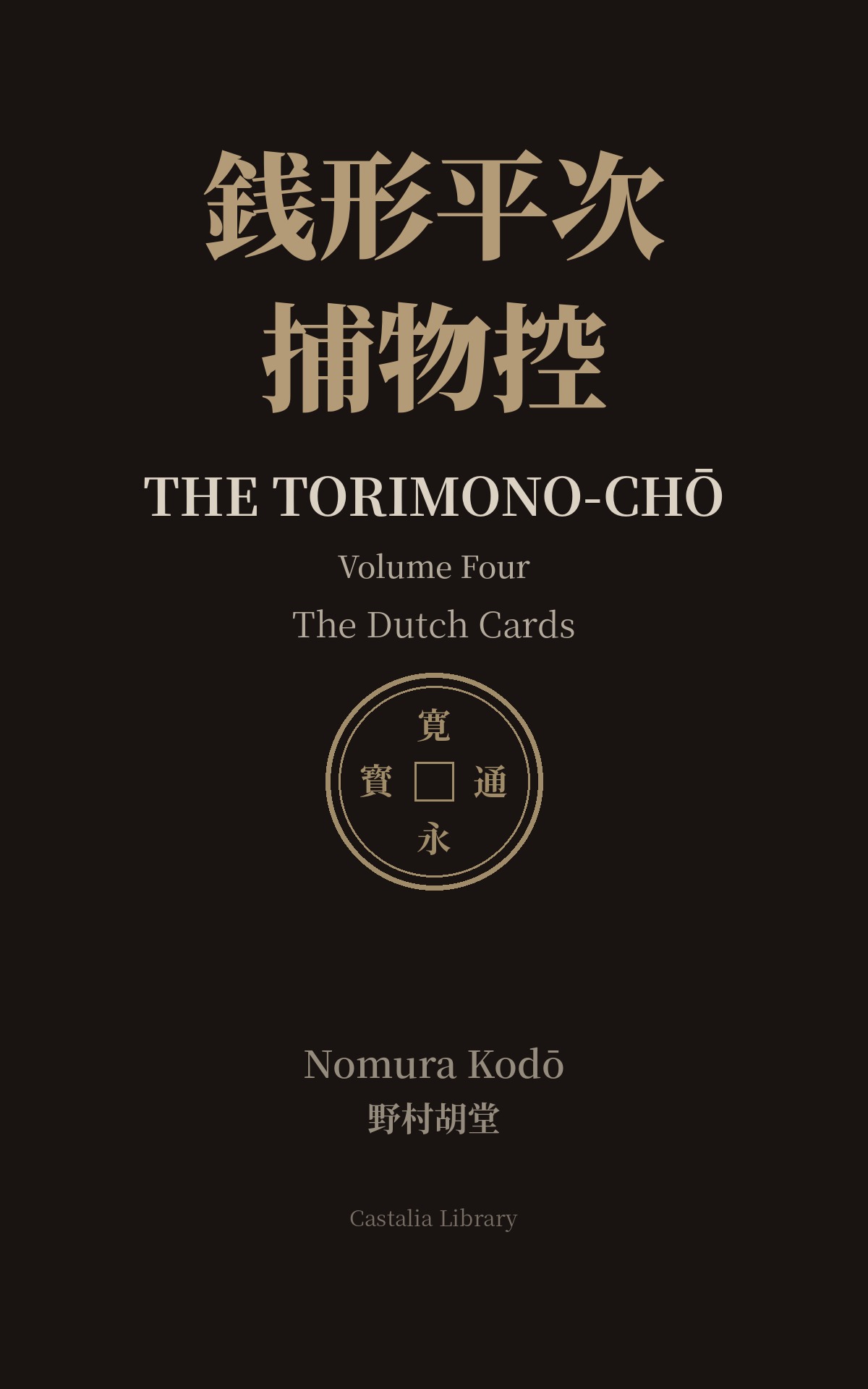
The Dutch Cards
by Kodō Nomura
Book 4 of Torimono-Chō
From $9.99/month — 3 ebooks per month
About this book
Volume Four: The Dutch Cards opens at a characteristically unhurried pace — “A Single Monsen” finds Heiji and Hachi bored on a quiet spring afternoon, itching for a case — before plunging into one of the series’ most inventive premises. “The Red Birthmark” puts Heiji himself under suspicion when a robber terrorizing Edo turns out to be his exact double in build, voice, and manner; Inspector Sasano orders him to catch the impersonator or face the consequences. “The Eye of Ōmura Hyōgo” draws Heiji into a samurai’s world during a cherry-blossom evening at Mukōjima, and “The Three-Thousand-Ryō Affair” — the largest sum yet at stake in the series — tests Hachi’s ability to bluff his way into useful intelligence on his own. “Kōshin Alley” is a taut pursuit piece: Heiji and Hachi trap a phantom burglar called “the Thousand-League Tiger” in a horseshoe-shaped alley on a moonless night.
The title story, “The Dutch Cards,” is among the darkest in the series. A child-snatching ring is abducting children across Edo, and no thief-catcher can find them; Heiji takes the case with a personal urgency sharpened by his wife Oshizu’s pregnancy. The volume’s second half ranges from domestic mystery (“The Death of Otami,” “The Murdered Heir”) to the supernatural (“The Beckoning Skeleton,” in which a money-changer’s household is haunted) to the return of the resourceful female thief-catcher O-Shina in “The Twins’ Curse.” “Ofuji Solves It” is a rare case in which Heiji must cross into another investigator’s territory at the Magistrate’s personal request, and “The New Year’s Bonfire” catches the detective mid-holiday, unable to resist a case even on the third day of the new year.
Taken together, the twelve stories showcase Nomura Kodō at the height of his range — comedy, menace, pathos, and ingenious plotting in equal measure.
- Published
- January 1, 1931