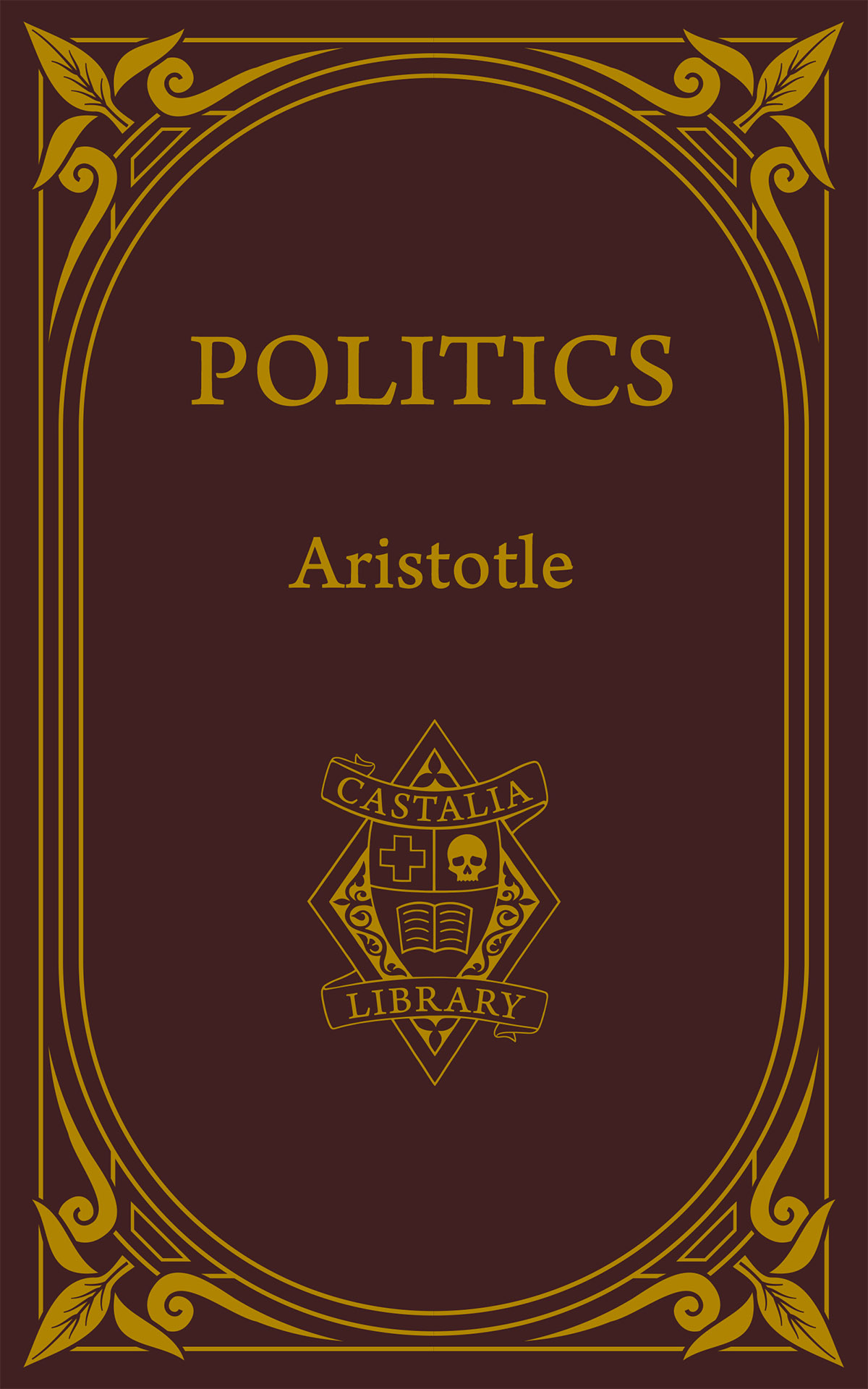
Politics
by Aristotle
From $9.99/month — 3 ebooks per month
About this book
Politics is a work of political philosophy by Aristotle, a 4th-century BC Greek philosopher. At the end of the Nicomachean Ethics, Aristotle declared that the inquiry into ethics leads into a discussion of politics. The two works are frequently considered to be parts of a larger treatise dealing with the "philosophy of human affairs". In Aristotle's hierarchical system of philosophy he considers politics, the study of communities, to be of higher priority than ethics, which concerns individuals.
The title of Politics literally means "the things concerning the πόλις (polis)", and is the origin of the modern English word politics. As Aristotle explains, this is understood by him to be a study of how people should best live together in communities, as the polis was seen by him as the best and most natural community for humans.
The history of Greek city-states, their wars and intrigues and political churning, was well-documented. In addition to such documentation, Aristotle pursued a research project of collecting 158 constitutions of various city-states in order to examine them for their strong and weak points. This evidence-based, descriptive approach to the study of politics was a hallmark of Aristotle's method.
- Published
- January 1, 0322